The Decorated Apparel Guide: What to Know Before You Order at Any Scale
Decorated apparel is any clothing item that has been customized with a logo, design, or artwork through a decoration method — screen printing, embroidery, puff printing, digital printing, or a combination. It covers everything from a 50-piece corporate uniform program to a 1,500-piece artist merch run.
Before you place your first order — or your fiftieth — there are decisions at every stage that determine whether the finished product matches what you envisioned. This guide covers the key ones.
1. Choose the Right Decoration Method First
The decoration method should be chosen before the blank, not after. Different techniques have different requirements, and the blank you select needs to support the method you're planning to use.
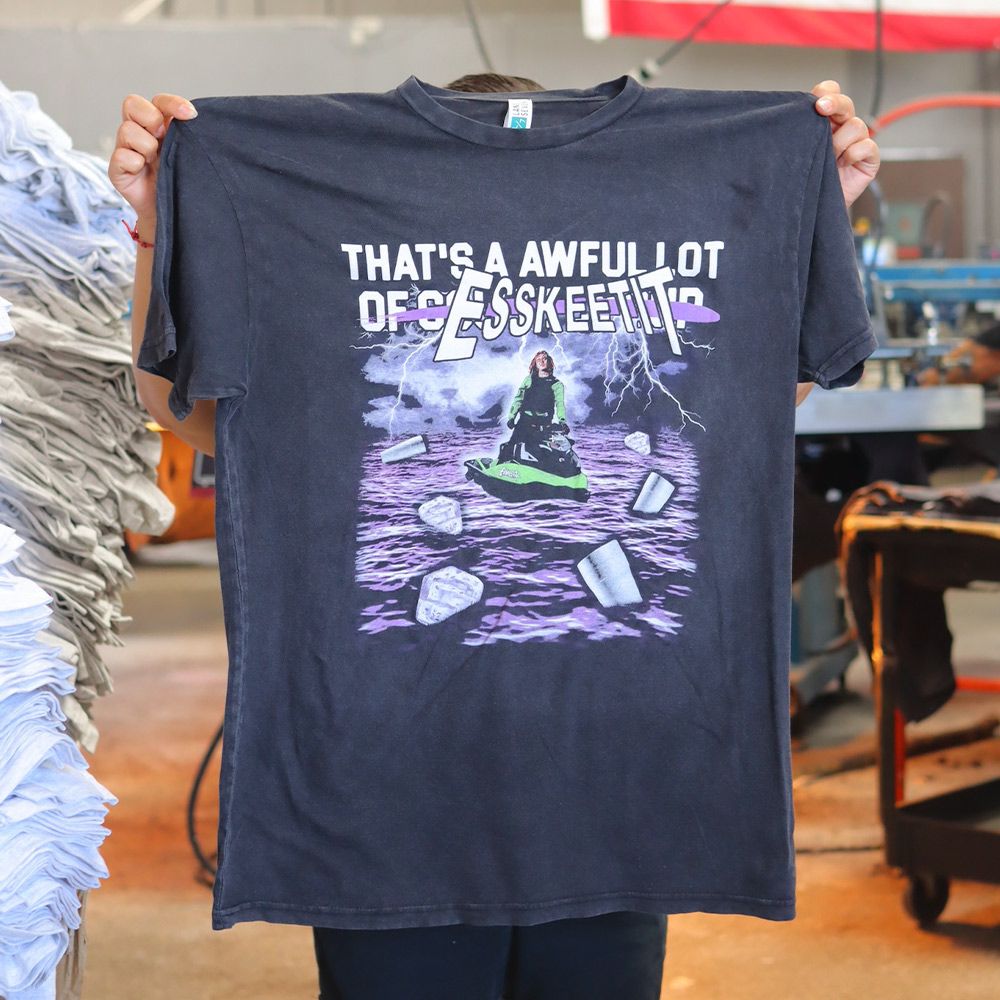
- Screen printing is the industry standard for bulk garment decoration. Ink is pressed through a screen, one color at a time, and cured permanently into the fabric. Durable, vibrant, and cost-effective at volume — per-unit cost drops significantly as quantity increases. Price breaks typically fall at 50, 75, 100, 150, 250, 500, and 1,000 pieces. Best for bold logos, graphics, and text-heavy designs.
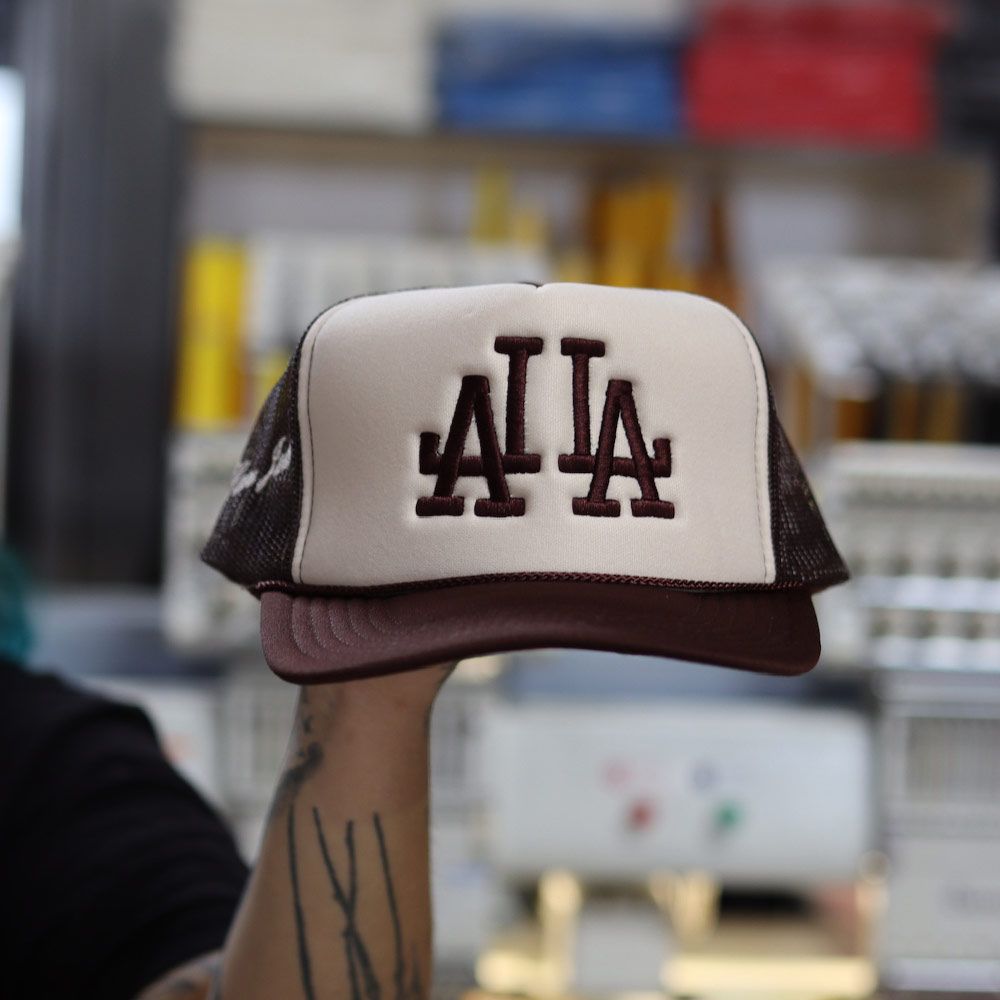
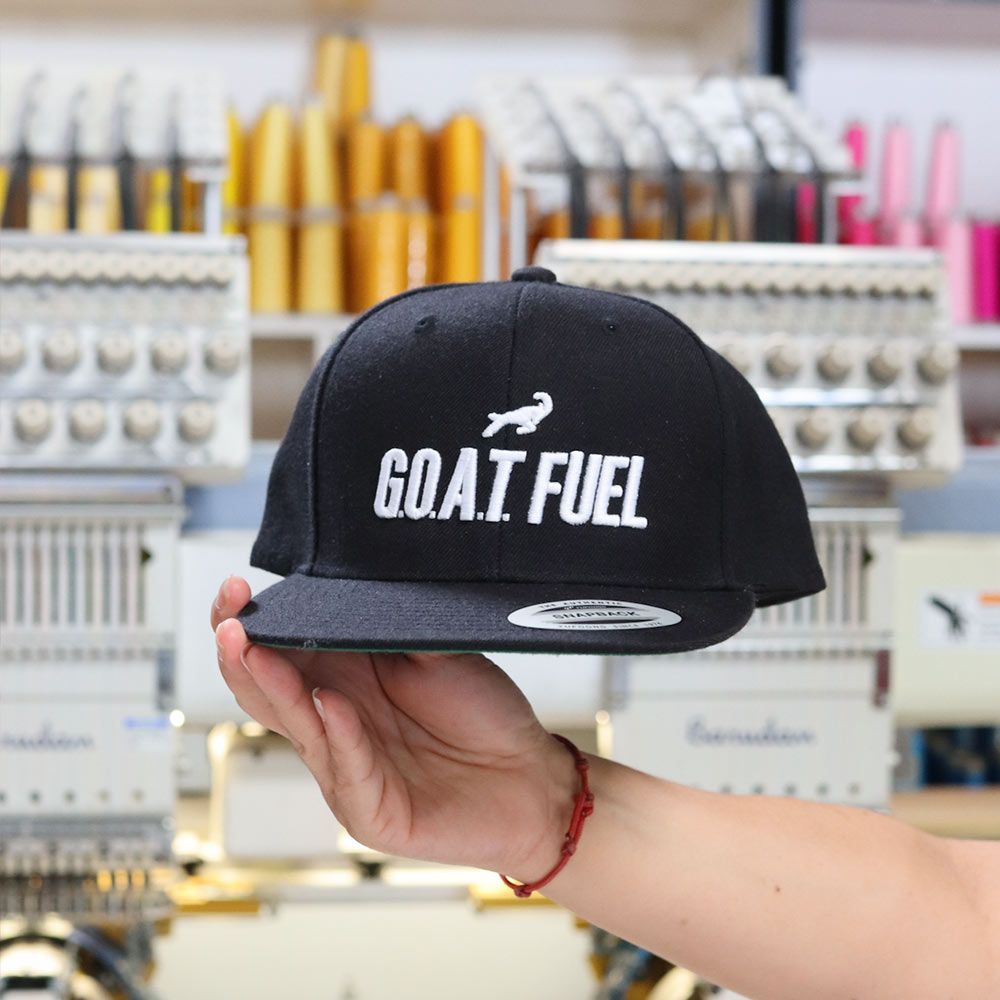
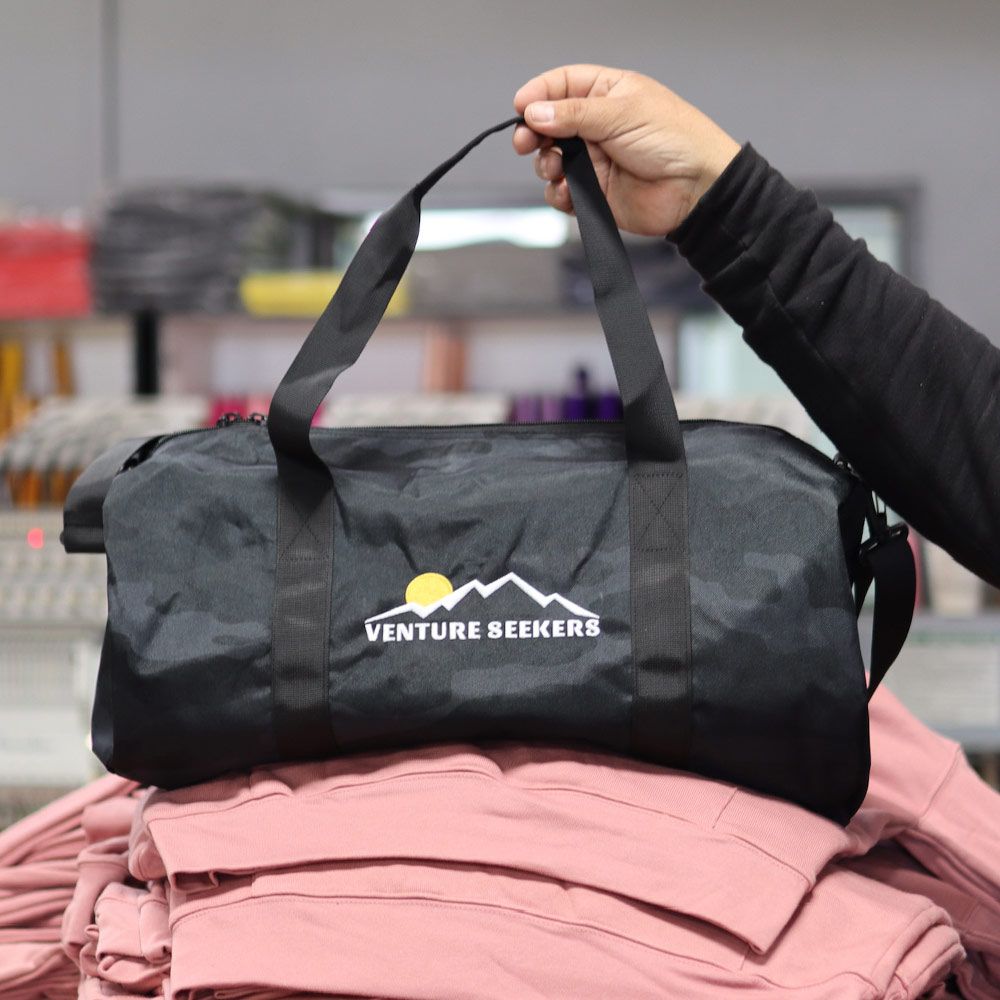
- Embroidery stitches thread directly into the fabric. It doesn't fade, crack, or peel, and it's the decoration method of choice for structured apparel — polos, caps, jackets, bags. Thread is matched to Pantone Coated references where possible; for embroidery, exact thread color matches cannot always be guaranteed, and a stitch-out sample is required before full production.
- Puff screen printing adds a foaming agent to the ink that rises during curing, creating a raised, dimensional surface. Best for bold, simple designs — thick letterforms and solid shapes — on cotton and cotton-blend garments. Fine detail and small text don't survive the expansion cleanly.
- Simulated process screen printing uses halftone dot patterns to reproduce gradients, shading, and photorealistic color from a limited ink set. The technique behind vintage-style and cinematic artwork at production scale.
- Jumbo screen printing extends the print area up to 17" × 23" for designs that need to fill the garment rather than sit on it. Requires specific press setup and tighter registration control than standard printing.
- Digital screen printing is a hybrid method — a white underbase through a screen, then a CMYK digital color layer on top. Full-color, photo-quality output at production speed, without per-color setup fees. Runs up to 400 garments per hour. Per-unit cost decreases with volume, unlike DTG.
2. Prepare Your Artwork Before You Quote
The artwork file is where most orders stall. Screen printing requires vector files (.AI, .EPS, .PDF) or raster at 300 DPI at actual print size — not a screenshot, not a web-resolution export. Each color needs a Pantone Coated (PMS C) reference. RGB color values don't convert reliably to ink.
For embroidery, your artwork goes through digitizing — conversion into a machine-readable stitch file — before any needle touches fabric. Elements below ¼ inch tall won't stitch legibly. Gradients don't translate to thread. A design that looks clean on screen may need simplification before it can be embroidered cleanly.
The artwork approval process is a binding confirmation: mockup, placement, dimensions, decoration method, and color are all locked in. Post-approval changes may delay production and incur additional charges. Review everything carefully before approving.
3. Understand What the Approval Locks In
Once you approve the digital proof, production begins exactly as specified. If there's an error in the approved artwork — a misspelling, wrong color, incorrect placement — and production has already started, corrections may not be possible. Garment Decor is not responsible for mistakes in artwork that was approved by the client.
Three things to check every time:
- Placement — is the design exactly where you want it?
- Color — do the Pantone references match your brand spec?
- Size — are the dimensions correct at the intended garment size?
4. Know the Policies That Affect Your Order
- Spoilage. Custom apparel production involves human labor at every stage. An industry-standard spoilage allowance of up to 5% applies — historically averaging closer to 2%. Spoiled items are removed from the order and refunded; they're not included in shipment. If you need exact quantities, this must be communicated before order approval and may incur an additional fee.
- Blank samples. If you're undecided on which garment to use, blank samples are available before committing to a full run. They're billable items, but costs can be applied as a credit toward the final invoice if samples are returned unused and undamaged before production begins.
- Customer-supplied garments. If you supply your own blanks, insurance coverage extends only to the decoration service — not the garment value. For high-value items, it's worth letting your decorator supply the blanks.
- Rush production. Rush orders complete in 2–4 business days and require all artwork, garment delivery, and order details confirmed upfront with no revisions. Rush slots are first-come, first-served and are not guaranteed until confirmed.
- Quote validity. Quotes are typically valid for 30 days. Garment pricing fluctuates with wholesale supplier availability. If a quote expires, request a refresh before placing the order.
5. Standard Placement and Variance
Industry-standard placements are:
- Full front: centered, 2"–3" below the front collar seam
- Left chest: 7" down from the shoulder seam, aligned with the heart
- Full back: centered, 2.5"–3.5" below the back collar seam
A 1-inch placement variance is considered acceptable in production. Printing within 1 inch of any seam, collar, pocket, or zipper is subject to distortion and is not considered a misprint. If a specific placement is required, it must be noted during the artwork approval process.
Ready to Start?
Garment Decor is a factory-direct decorated apparel shop in Montclair, CA — minimum 50 pieces, in-house production on M&R Challenger presses and Barudan embroidery machines, dedicated account rep on every order, and quotes returned within two hours.
Request a quote → | Browse services → | Read the full FAQ →