How to Compare Embroidery Services (And What Most Buyers Miss)
Choosing between embroidery services feels straightforward, until you get the finished product back and something's off. The logo text looks blurry. The stitching puckers on the chest. The colors don't match what you approved.
Most buyers compare price, turnaround, and portfolio, then stop there. But the variables that actually determine quality, digitizing accuracy, thread durability, backing stability, aren't things you can evaluate from a website gallery. Here's how to actually compare embroidery services before you commit to a production run.
1. Evaluate the Digitizing, The Hidden Dealbreaker
Every embroidery job starts with a digital file that instructs the machine where to place each stitch, in what order, and at what density. If that file is built poorly, no machine, no matter how advanced, can fix it. The output is only ever as good as the digitizing underneath it.
This is what most buyers miss entirely. They look at a portfolio of finished work and assume that quality will translate to their design. But portfolio pieces are typically a shop's best work, on designs that were built to succeed. Your logo with its tight kerning, small text, or intricate curves is a different test.
What most buyers miss: Relying solely on a visual portfolio to evaluate capability.
How to test it properly: Send the shop a file with elements that stress-test digitizing, small text, curved lines, fine details. Ask for a physical stitch-out or digital simulation before full production. Any shop confident in their digitizing will have no hesitation doing this. A shop that pushes back or skips it is telling you something.
2. Check Stitch Quality and Tension
A well-executed embroidery job looks uniform from every angle, consistent stitch tension, no gaps, no thread bunching, no areas where the fabric pulls or puckers under the weight of the design. Achieving this requires calibrated machines, the right thread, and backing that's matched to the garment.
Thread quality matters more than most buyers realize. High-tensile threads resist fading through repeated washing and maintain color vibrancy over the life of the garment. Cheap thread fades fast and breaks down, which looks fine on delivery but becomes a problem six months later.
What most buyers miss: Not asking about thread brands or backing selection before production.
What to ask: What thread do you use, and can you confirm it's colorfast? What backing type will you use for this specific fabric, tearaway, cutaway, or water-soluble? A shop that can answer these questions specifically (not generically) knows what they're doing.
3. Review Pricing Models
Most embroidery services price by stitch count typically somewhere between $1 to $3 per 1,000 stitches. For simple, low-density designs, this is usually straightforward. For complex or dense artwork, it can get expensive quickly.
Some shops offer flat-rate per-garment pricing, which can work out better for dense designs. Neither model is inherently better, but not knowing which one a shop uses, or not understanding how your specific design maps to their pricing structure, leads to quotes that don't reflect reality.
What most buyers miss: Assuming all quotes are comparable without accounting for digitizing setup fees, fabric surcharges (caps and thick jackets often carry them), or minimum order premiums.
How to compare fairly: Give every shop the same design and the same quantity. Ask for an itemized breakdown, base embroidery, digitizing setup, any add-ons. That's the only way to compare apples to apples.
4. Logistics and Turnaround
Embroidery shops vary significantly on minimum order quantities, standard production windows, and how they handle rush requests. What works for a 500-piece corporate uniform run looks different from a 75-piece streetwear drop with a hard ship date.
What most buyers miss: Not asking about rush capabilities or whether the shop can scale with them as order volumes grow.
What to confirm upfront: Standard turnaround time, what a rush order actually costs, and whether their production capacity can handle growth. A shop that's right for your first order should still be the right shop when that order doubles.
A Starting Point Worth Considering
If you're evaluating options, our embroidery service checks the boxes worth checking: professional digitizing, Madeira Polyneon thread selected for color accuracy and durability, and backing matched to your specific fabric, tearaway, cutaway, or water-soluble depending on the garment.
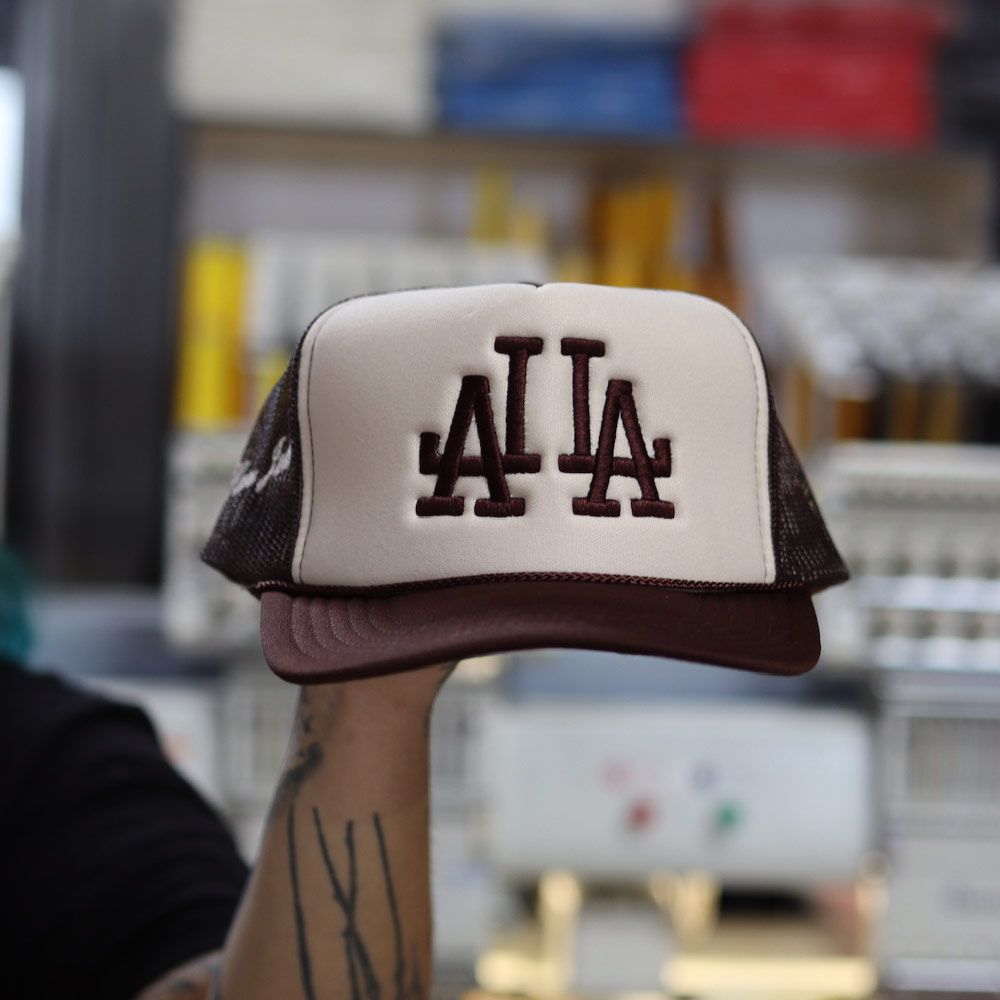
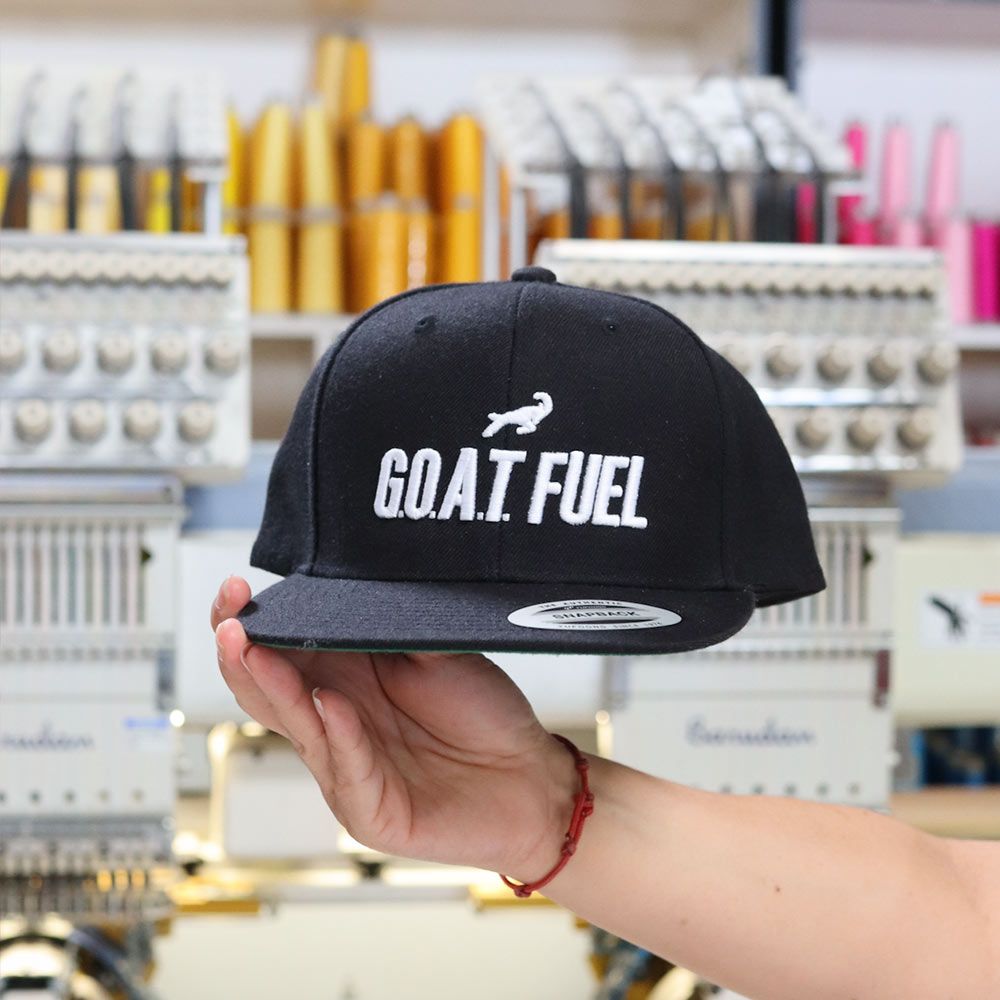
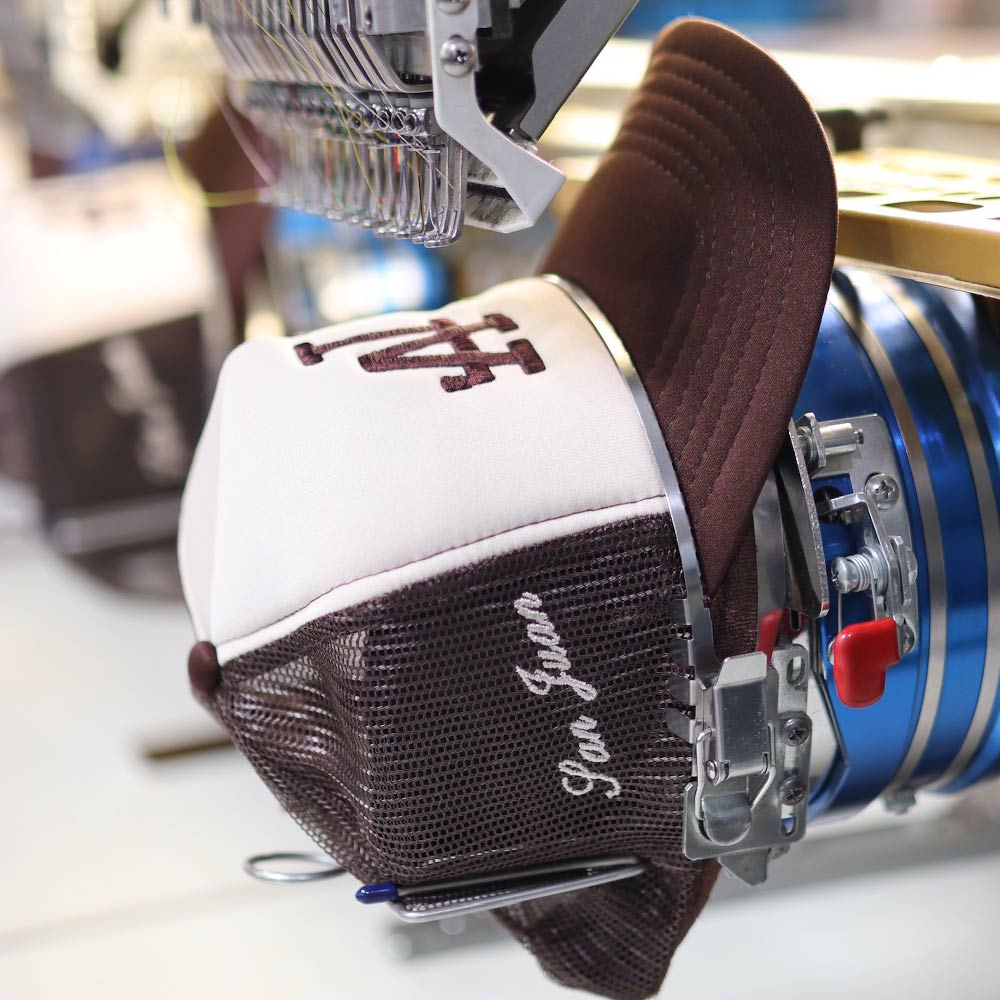
We run commercial-grade multi-head Barudan machines, offer flat and 3D puff embroidery, and assign a dedicated account rep to every project, someone who reviews your artwork before production and handles any issues before they become your problem.
Starting at 50 pieces, with tiered pricing and a two-week standard turnaround. Rush available. Request a quote and we'll get back to you within two hours.