What Embroidery Services Actually Look Like: Thread, Machines, and Turnaround
Professional embroidery services digitize your logo into a stitch file, then sew it directly into a garment using commercial multi-head machines, with turnaround typically running 10 business days from artwork approval and a 50-piece minimum. Thread quality, machine capacity, and backing selection are what separate a crisp, durable result from a puckered one. Here's what actually happens behind the scenes, and what to expect from each step.
How Does the Embroidery Process Work?
Every order follows the same six steps at Garment Decor:
- Digitization. Your logo is converted into an embroidery file that tells the machine where to place each stitch, in what order, and in what color.
- Thread selection. Colors are matched to your brand guidelines.
- Backing selection. The right stabilizer is chosen for your fabric.
- Machine setup. The design is loaded and the garment is hooped for precise placement.
- Embroidery. The machines stitch the design.
- Finishing. Backing is trimmed, loose threads removed, and items steamed.
The result is a permanent decoration that won't fade, crack, or peel, which is why embroidery is considered the most durable decoration method for polos, caps, jackets, and uniforms.
What Thread Do Embroidery Shops Use?
We use Madeira Polyneon thread, which comes in hundreds of colors and allows close matching to brand palettes. Thread choice matters because cheaper polyester thread can fade faster and leave brand colors looking slightly off. If exact color accuracy matters to you, ask any shop you're comparing which thread line they run and whether they can match to your Pantone references.
What Kind of Machines Handle Bulk Embroidery?
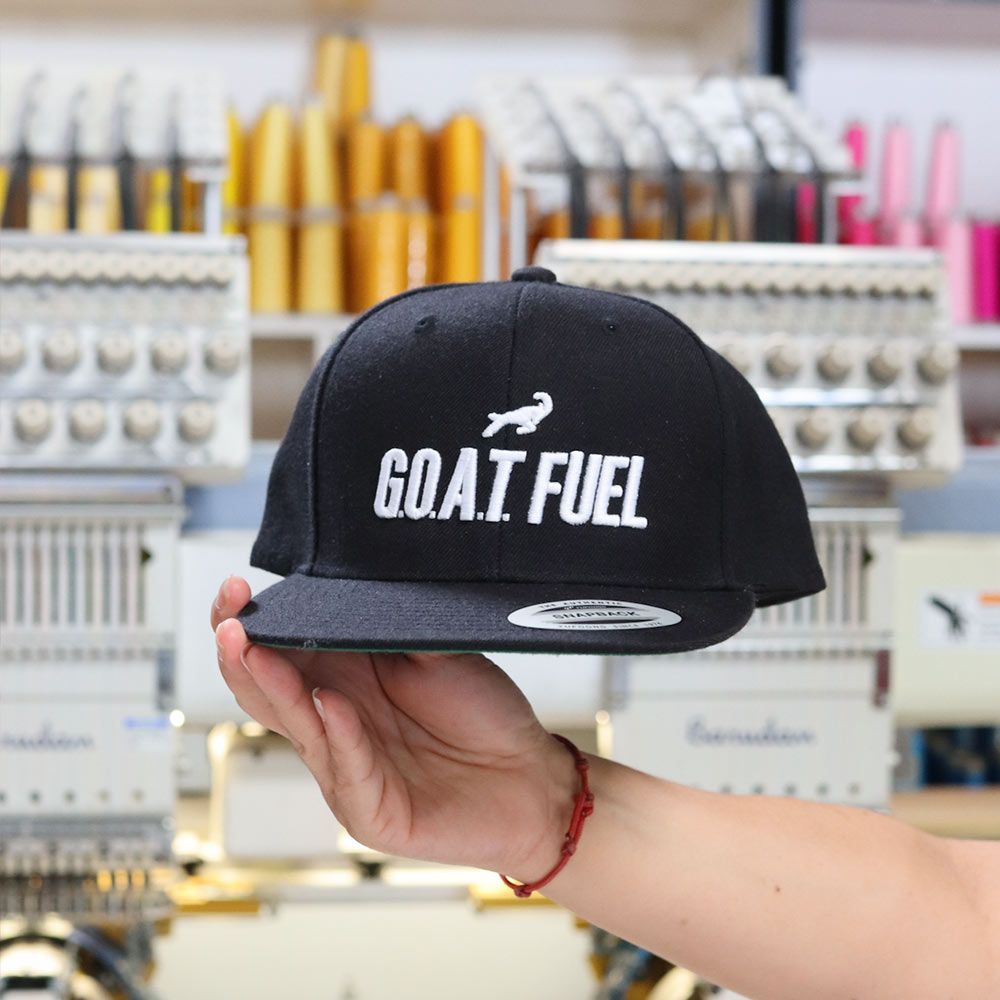
Our shop runs five Barudan embroidery machines with six heads each, giving us 30 heads total. Multi-head machines stitch the same design on several garments simultaneously, which is what keeps large orders consistent from the first piece to the last. Maximum embroidery size is 15.7" x 16.5", large enough for full-back designs on jackets and hoodies.
Why Does Backing Matter?
Backing is the stabilizer under the fabric that keeps stitches from puckering. The right choice depends on the garment:
Backing TypeBest ForTearawayStable woven fabrics: polos, dress shirts, heavy cottonCutawayStretchy or unstable fabrics: performance wear, knits, fleeceWater-solubleDelicate fabrics, towels, baby items
How Long Does Embroidery Take?
Standard turnaround is 10 business days from final artwork approval and receipt of all blank garments. Rush embroidery is typically completed in 2–4 business days, depending on scope and machine availability, and requires that artwork, sizes, and blanks are all finalized upfront. Rush fees apply, and rush slots are first-come, first-served.
Real Embroidery Projects Across Different Products
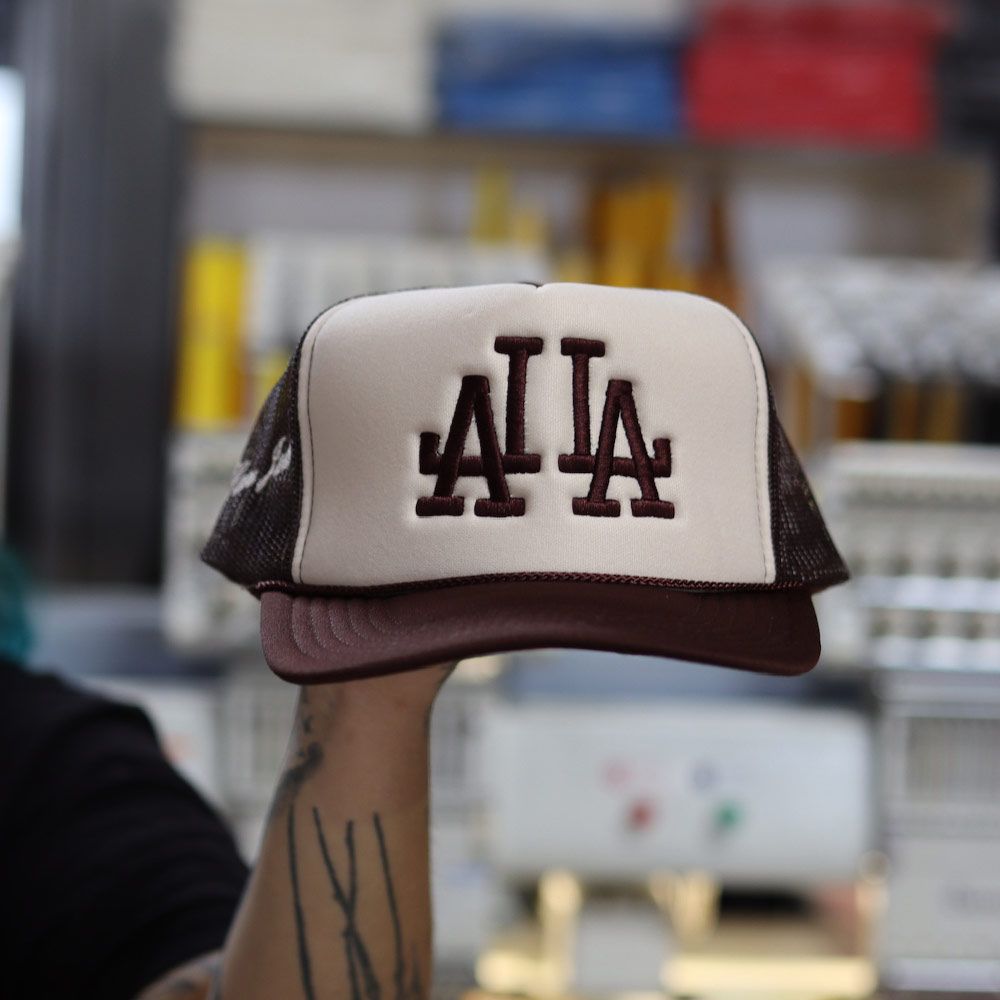
- Structured caps for streetwear. For Sunset Oil Mini Mart, we embroidered Otto Cap 39-165 five-panel trucker hats across multiple colorways. The foam front provides a smooth, structured surface that holds a crisp logo.
- Small-batch event merch. A local clothing brand ordered 185 black OTTO 32-467 mesh-back trucker hats with white embroidery on the front and side for a farmers' market pop-up. A sample was approved before production began.
- Premium sweatshirts. On Champion CD400 garment-dyed crewnecks (10 oz, 90/10 cotton/polyester), a detailed character design was embroidered instead of printed, creating a textured, dimensional look screen printing couldn't reproduce.
- Corporate gifting on rush. Alignment Health ordered 250 black The North Face Groundwork backpacks embroidered with their logo, completed in four business days through rush service.
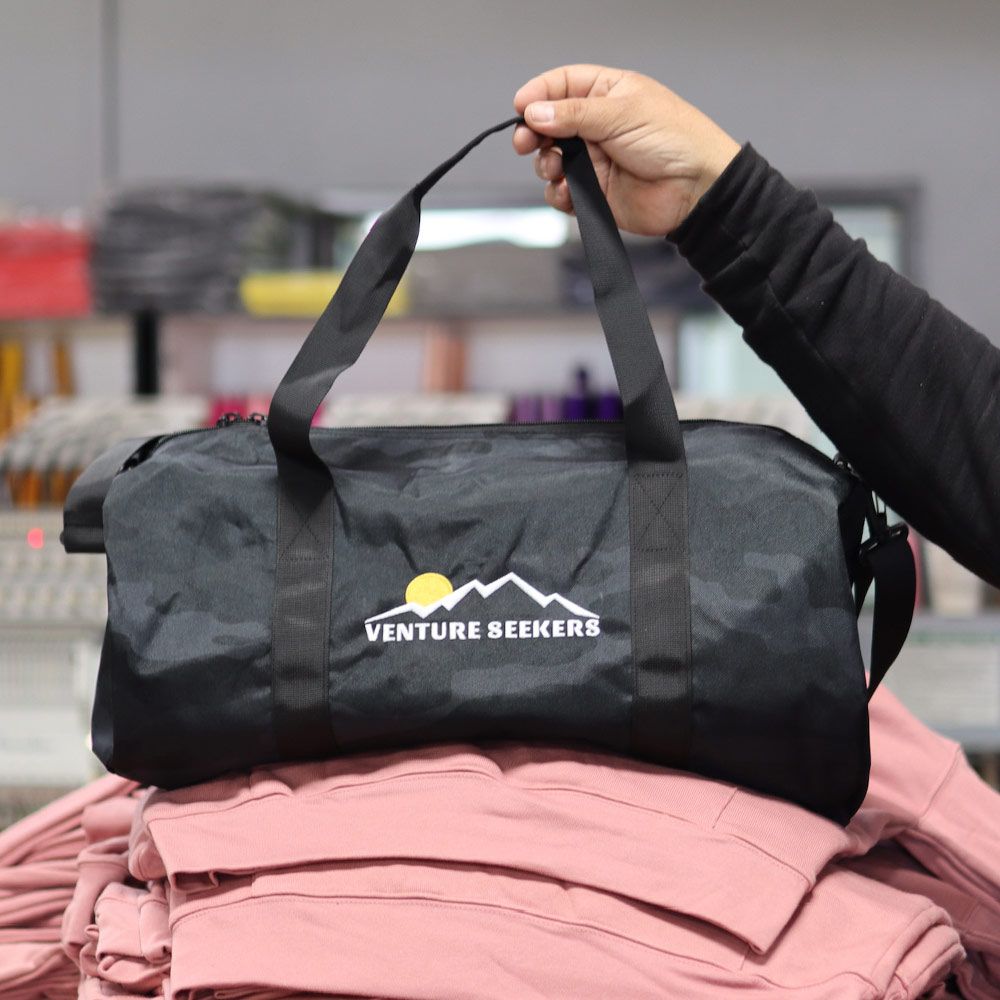
- Wholesale towels. We've also embroidered Carmel Towel Company velour beach towels in bulk, proving embroidery extends well beyond apparel into accessories and home textiles.
What Should You Prepare Before Requesting a Quote?
Send your logo as a vector file (AI, EPS, or PDF) so it can be digitized cleanly. Expect small details to be simplified, since thread can't replicate tiny text or fine lines. Choose structured fabrics like pique polos and twill caps for the cleanest results, and decide on placement early: left chest is most common, but right chest, sleeve, back, and cap front are all available.
What Affects Embroidery Pricing?
Embroidery is custom quoted per project. Pricing depends on garment type, number of colors and placements, stitch count, and order quantity. Volume discounts apply at 75, 100, 150, 250, 500, and 1,000 pieces. Simplifying small details and reducing stitch count are the fastest ways to lower cost without changing the garment.
Ready to Get a Quote?
Our embroidery team can walk you through digitizing, thread matching, backing, and timeline for your specific project, typically with a quote back within 24 hours.
Request a quote → and we respond within two hours.