What We've Produced With Puff Printing and What Made These Projects Work
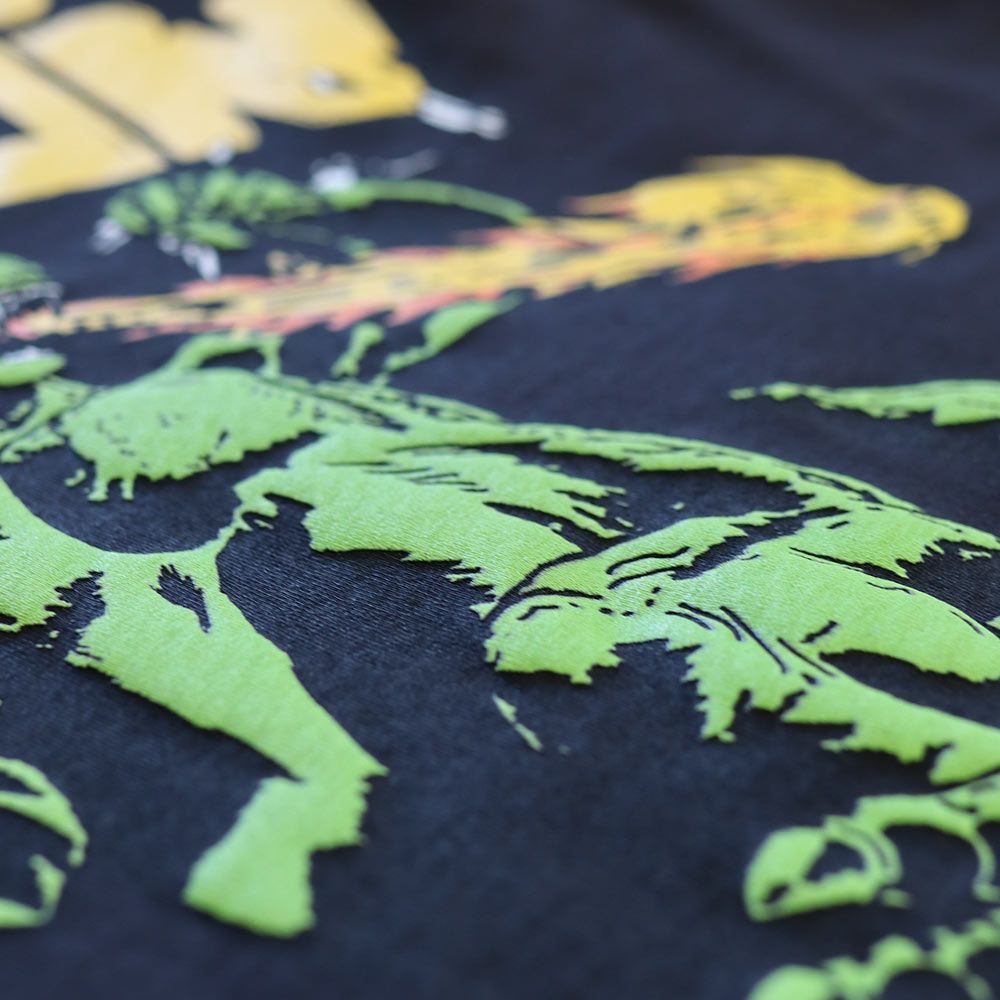
Puff printing is one of those techniques that looks simple until you try to execute it at scale. The idea is straightforward, plastisol ink mixed with a foaming agent expands when heat-cured, producing a raised, three-dimensional surface on the garment. The execution is a different matter.
Getting puff right consistently across a production run requires precise ink ratios, calibrated dryer temperatures, screen mesh counts that match the ink deposit, and artwork prepared specifically for how expansion behaves. When all of that is dialed in, the result is bold, tactile, and immediately recognizable as premium. When it isn't, you get uneven puffing, inconsistent texture, and designs that look bloated rather than intentional.
Here's how puff printing works, when it's the right call for a project, and what real production looks like in practice.
What Puff Printing Is Actually Good For
Puff isn't the right technique for every project, and experienced decorators are upfront about that. It works best on cotton and cotton-blend fabrics where the ink bonds reliably and the foam expansion activates evenly. Full polyester garments aren't a suitable substrate for puff; the ink doesn't adhere the same way and the expansion reads inconsistently.
Design-wise, puff rewards simplicity and scale. Bold typography, block letterforms, thick logos, and solid filled areas are where it performs at its best. The expansion that creates the 3D effect is also what causes problems for fine detail: thin lines blur, small text becomes illegible, and any element that's meant to be crisp at a small scale gets lost once the foam activates.
The designs that land best are the ones where the bold, raised quality is the point, not a side effect. Streetwear graphics, artist merch, statement tees, and fashion-forward brand drops are the natural applications. For corporate programs or designs that require legible fine detail, standard flat screen printing is usually the stronger choice.
Puff is also frequently combined with flat printing, using raised ink for a main graphic or wordmark, and standard flat ink for surrounding detail or supporting text. This combination lets you get the impact of puff where it reads best while maintaining legibility where it matters.
How the Production Process Works
Puff printing runs on the same equipment as standard screen printing, the difference is in the ink and the curing step. Puff ink is mixed and applied through a screen mesh, but the mesh count has to be matched to the ink deposit thickness. Too fine a mesh under-deposits the ink and produces minimal puff. Too coarse and the ink spreads beyond the design edge.
After printing, the garment passes through a conveyor dryer heated to the right activation temperature, typically around 320–330°F. This is where the foaming agent triggers and the ink rises. Over- or under-curing at this stage produces different failure modes: too much heat and the foam collapses; too little and it doesn't fully activate. The result on a properly produced puff piece is a consistent, even raised surface that holds its structure through repeated washing.
Projects That Show What Puff Printing Looks Like in Practice
The most direct way to evaluate whether puff printing fits your project is to see what it produces across different garments, colors, and design approaches. Here are five projects that illustrate the range.
Puff Screen Printing on Independent SS4500 Midweight Hoodies — Pink Ink on Chocolate
750 Independent SS4500 midweight hoodies in chocolate brown, screen printed with raised puff pink ink, completed in 4 days on M&R Challenger presses. The color contrast between the chocolate blank and the pink puff ink is the central design decision here, the raised surface catches light differently than flat ink would on the same color combination, giving the graphic a presence that reads from a distance.
The SS4500 is an ideal substrate for puff work: its midweight cotton-blend construction provides the fabric stability the technique requires, and the tighter knit holds the ink deposit without the bleeding that can occur on looser fabrics. Delivering 750 pieces in 4 days reflects the production capacity of running puff at volume on commercial M&R presses rather than manual equipment.
Archangel — Puff Screen Printing and Tonal Embroidery on Made Blanks Ready To Dye Varsity Crewnecks
750 Made Blanks Ready To Dye Varsity Crewnecks in dyed orange for clothing brand Archangel, combining puff screen printing on the back with tonal embroidery in orange thread on the front, completed as a rush order in 3 business days. This project is a strong example of multi-technique decoration on a single garment: the puff on the back delivers bold, dimensional graphic impact while the tonal embroidery on the front adds a subtler, texture-on-texture element that rewards closer inspection.
Running two decoration methods on the same piece, especially on a rush timeline, requires production coordination that most shops aren't set up for. The dyed-orange colorway was also a deliberate choice to create a tonal relationship between the garment and the thread, rather than working with contrast as the primary visual strategy.
3D Puff Screen Printing on LA Apparel 1801GD Tees — Orange Ink with Flat Plastisol
Orange 3D puff ink layered with flat plastisol on the LA Apparel 1801GD, a project that demonstrates how puff and flat printing can work as complementary techniques on the same design. The 1801GD is a 6.5 oz garment-dyed heavyweight tee with a tight cotton weave that's well-suited for puff work: the fabric density holds the ink deposit evenly and provides the backing stability that 3D puff needs to activate without migrating beyond the design edge.
Using puff for the primary graphic element and flat ink for supporting detail creates a hierarchy on the print, the raised surface draws the eye first, and the flat elements provide context without competing. This approach is worth considering for any brand that wants dimensional impact on a premium blank.
The Saddest Faction — Multi-Color Puff on TeeStyled TS7000 Tees
750 TeeStyled TS7000 tees with puff screen printing in yellow, green, and red raised plastisol inks, delivered in 8 business days. Running puff in multiple colors on the same design adds production complexity, each color requires its own screen and its own pass through the press, and the registration between puff layers has to be tight enough that the expanded ink doesn't bridge into adjacent colors. The three-color palette here works because each color occupies its own defined area rather than overlapping, which keeps the expansion predictable and the color boundaries clean. At 750 pieces, consistency across the run matters as much as the quality of any individual piece.
Kulri Clothing — Tonal Puff on Lavender UpCycle LA Crewnecks
Tonal lavender puff screen printing on UpCycle LA crewnecks with custom woven labels, a project that takes a completely different approach from the high-contrast work above. Tonal puff uses an ink color matched to the garment itself, so the design reads as texture rather than color.
The raised surface catches light and creates dimension that's visible on the garment but doesn't announce itself the way a contrasting color would. It's a subtle, fashion-forward application suited to lifestyle brands and retail-ready programs where the aesthetic is intentional and restrained. The addition of custom woven labels on this project reflects a full retail-finishing approach, the garment is production-ready for retail or e-commerce fulfillment straight from our shop.
Ready to Run a Puff Project?
We handle custom puff screen printing starting at 50 pieces, with a dedicated account rep reviewing your artwork before production to make sure the design is set up correctly for the technique. Request a quote and hear back within two hours.