Custom Clothing Printing: How to Choose the Right Method for Your Brand or Event
There's no single best method for custom clothing printing. There's the right method for your design, your quantity, your garment, and your budget — and those four variables rarely all point in the same direction.
Most buyers make this decision by asking "what's the cheapest option?" or "what does everyone else use?" Both are the wrong questions. The right question is: what does this specific project actually need?
Here's how to think through it.
Define the Project Before You Choose the Method
Before evaluating printing techniques, lock in three things:
- Your quantity. Volume is the single biggest driver of which method makes economic sense. Methods that are cost-effective at 50 pieces are often expensive at 500, and vice versa.
- Your design. How many colors? Are there gradients or photorealistic elements? Is it a bold graphic or a detailed illustration? The design determines which methods can reproduce it accurately.
- Your garment. Different fabrics respond differently to different inks. A method that works beautifully on 100% cotton can perform inconsistently on a polyester blend.
With those three locked in, the method decision gets significantly easier.
The Methods Worth Knowing — and When They Apply
Screen Printing — Best for Volume and Durability
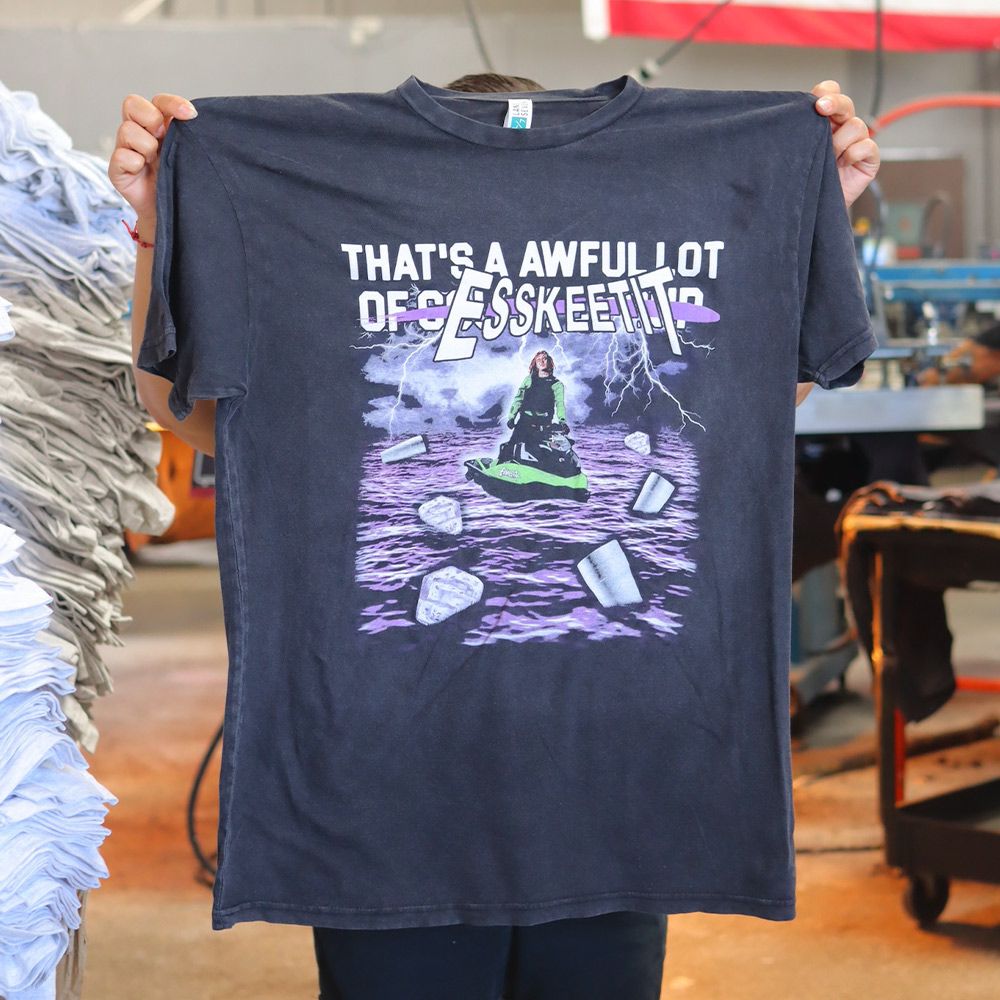
Screen printing is the industry standard for custom clothing at scale. Each color is pressed through a separate mesh screen, producing bold, vibrant prints that hold up through years of washing without fading or cracking. The setup cost (building screens) is fixed, which means the per-unit cost drops significantly as quantity increases.
Right for: Bulk orders of 50+ pieces with defined color palettes — logos, wordmarks, event tees, uniforms, merch runs. The economics improve at every volume tier: 100 pieces costs less per unit than 50, 250 less than 100, and so on.
Within screen printing, several specialized variations extend what's possible:
- Simulated process printing reproduces gradients, vintage aesthetics, and photorealistic color through halftone dot separation — without a screen for every tone
- Jumbo printing covers the full torso at up to 17" × 23" for designs that need to fill the garment rather than sit on it
- Puff screen printing uses a foaming agent in the ink that rises during curing, creating a tactile 3D surface — popular for streetwear and fashion-forward brands
Embroidery — Best for Structured Apparel and Corporate Programs
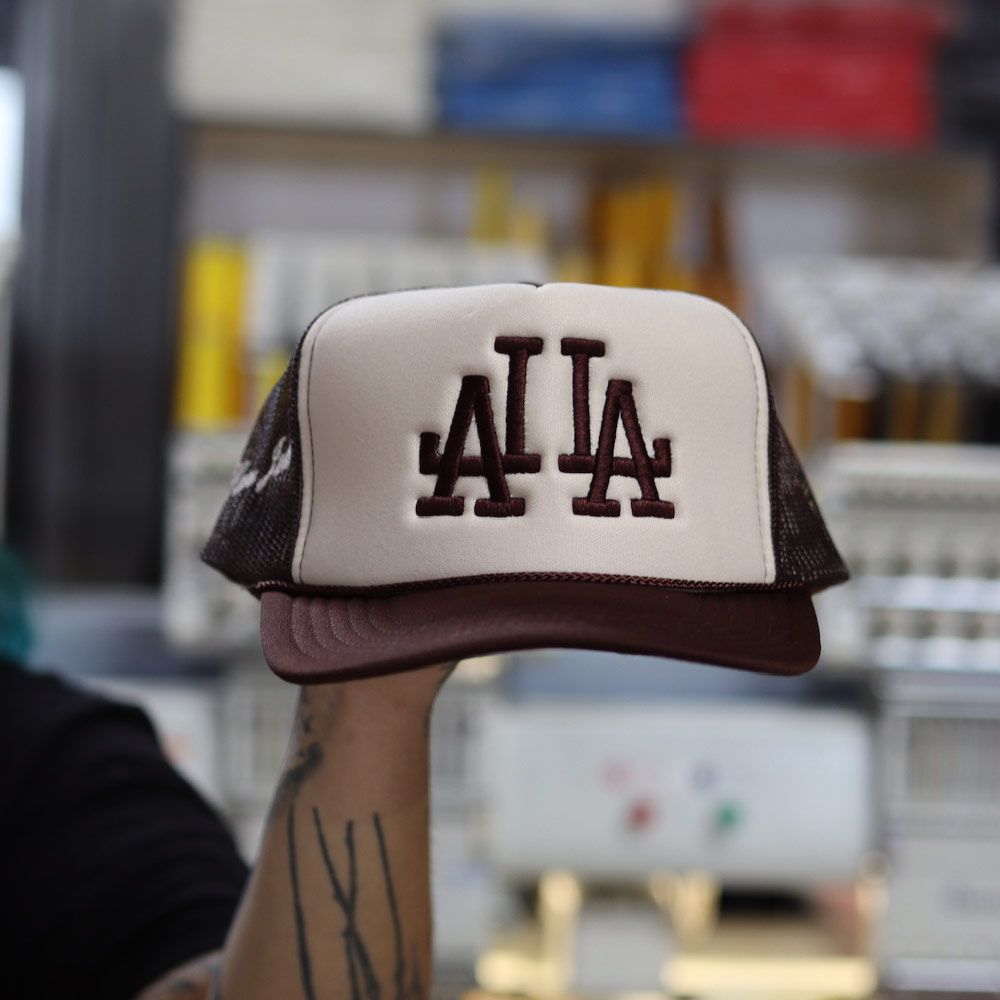
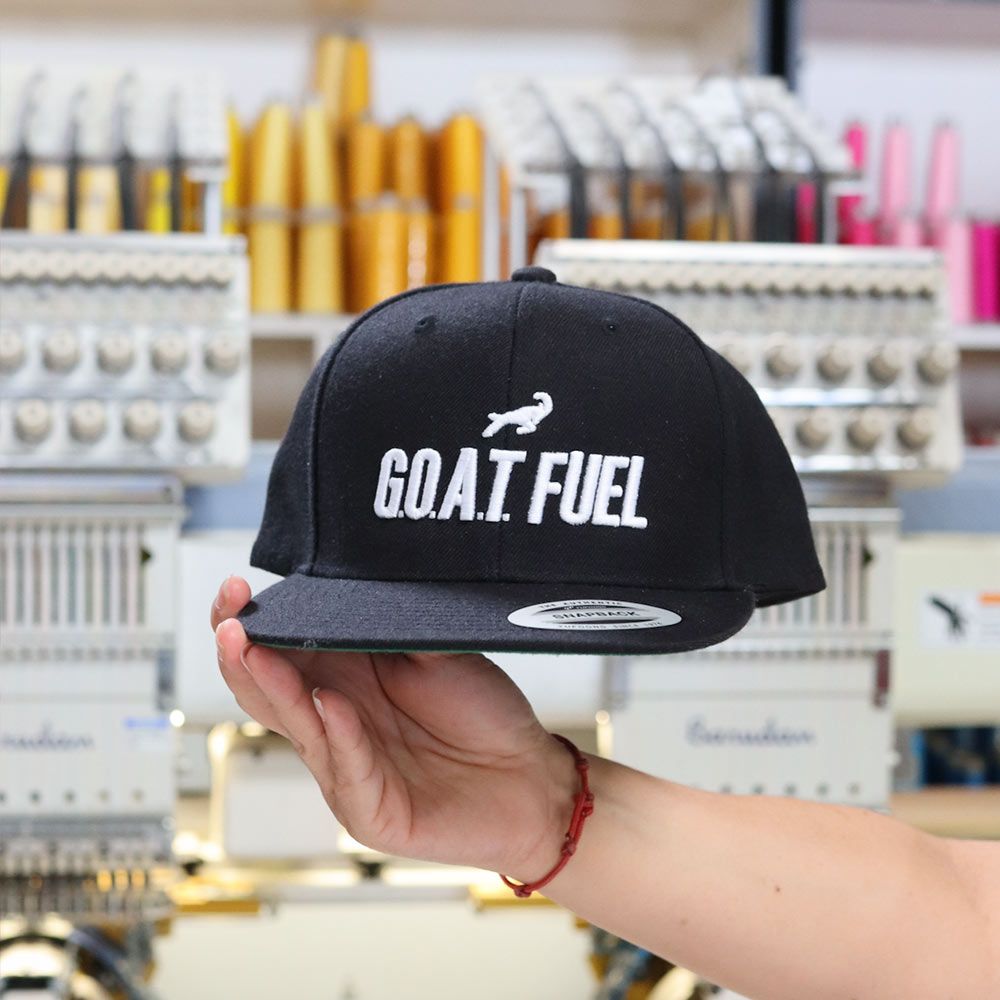
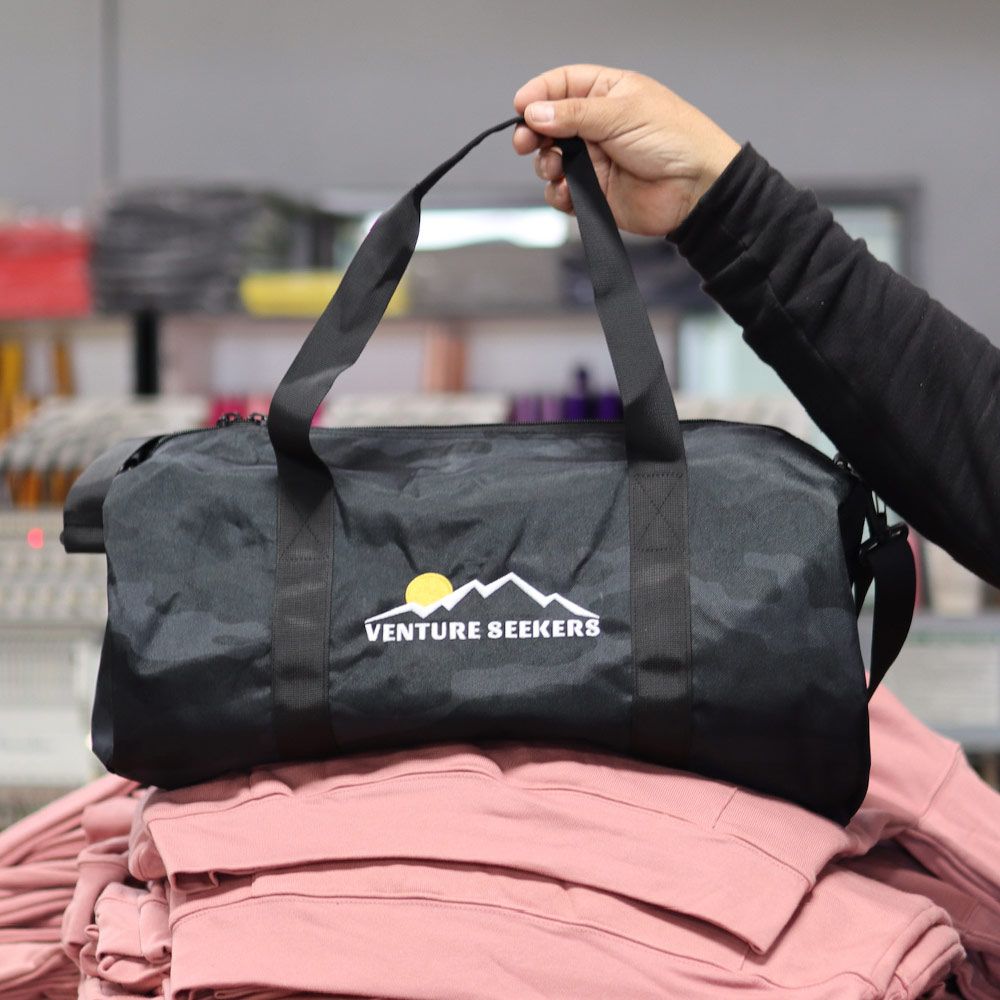
Embroidery stitches thread directly into the fabric rather than applying ink on top of it. The result is permanent, dimensional, and carries a visual weight that print methods can't replicate. It doesn't fade, crack, or peel — the decoration becomes part of the garment.
Right for: Polos, caps, jackets, bags, uniforms — any structured garment for a corporate, hospitality, or team program where a polished, professional appearance is essential. Both flat and 3D puff embroidery are available depending on the design and desired effect.
Digital Screen Printing — Best for Full-Color Work at Production Volume
Digital screen printing is a hybrid method: a traditional white underbase is applied through a screen, then a digital CMYK printer deposits the full-color artwork on top. The result is photo-quality, full-color output — unlimited colors, gradients, photorealistic detail — at production speeds up to 400 garments per hour, with a soft water-based finish.
Right for: Complex, multi-color artwork at 50+ pieces where DTG would be too slow or too expensive at volume. No pretreatment, no per-color setup fees, and per-unit cost decreases with quantity — unlike DTG. This is the method for brands that have outgrown what spot-color screen printing can handle but need volume economics, not per-piece DTG pricing.
Methods We Don't Offer — But Are Worth Understanding
DTG (Direct-to-Garment)
DTG prints directly onto the garment using an inkjet printhead. Unlimited colors, no setup fees, works well for one-offs and small runs with photorealistic artwork. The limitation is scale: production runs at roughly 50 garments per hour, and the per-unit cost remains high as quantity grows. For runs above 50 pieces with complex artwork, digital screen printing is almost always more cost-efficient.
DTF (Direct-to-Film)
DTF transfers a printed film onto the garment via heat press. It works on virtually any fabric without pretreatment and handles detailed artwork cleanly. The trade-off is hand feel — the transfer sits on top of the fabric rather than bonding into it, producing a slightly stiffer surface. At scale, the per-unit cost doesn't improve the way screen-based methods do.
Both DTG and DTF are useful for specific situations, particularly small runs and sample production. For growing brands and events with real quantities, the methods above almost always produce better economics.
A Quick Decision Framework
One More Variable: Who's Doing the Printing
The method is only as good as the shop executing it. In-house production — a shop that runs its own presses rather than outsourcing to a contract printer — means direct accountability for quality, real control over turnaround, and someone who can actually fix a problem before it ships.
At Garment Decor, all decoration methods above are run in-house at our Montclair, CA facility: screen printing (spot color, simulated process, jumbo, puff), digital screen printing, and embroidery (flat and 3D puff). Starting at 50 pieces, with a dedicated account rep on every order and a pre-production sample before the full run begins.
Not sure which method fits your project? Request a quote — we'll recommend the right approach and get back to you within two hours.