Puff Print vs. Flat Screen Print: Which Finish Is Worth It for Your Brand?
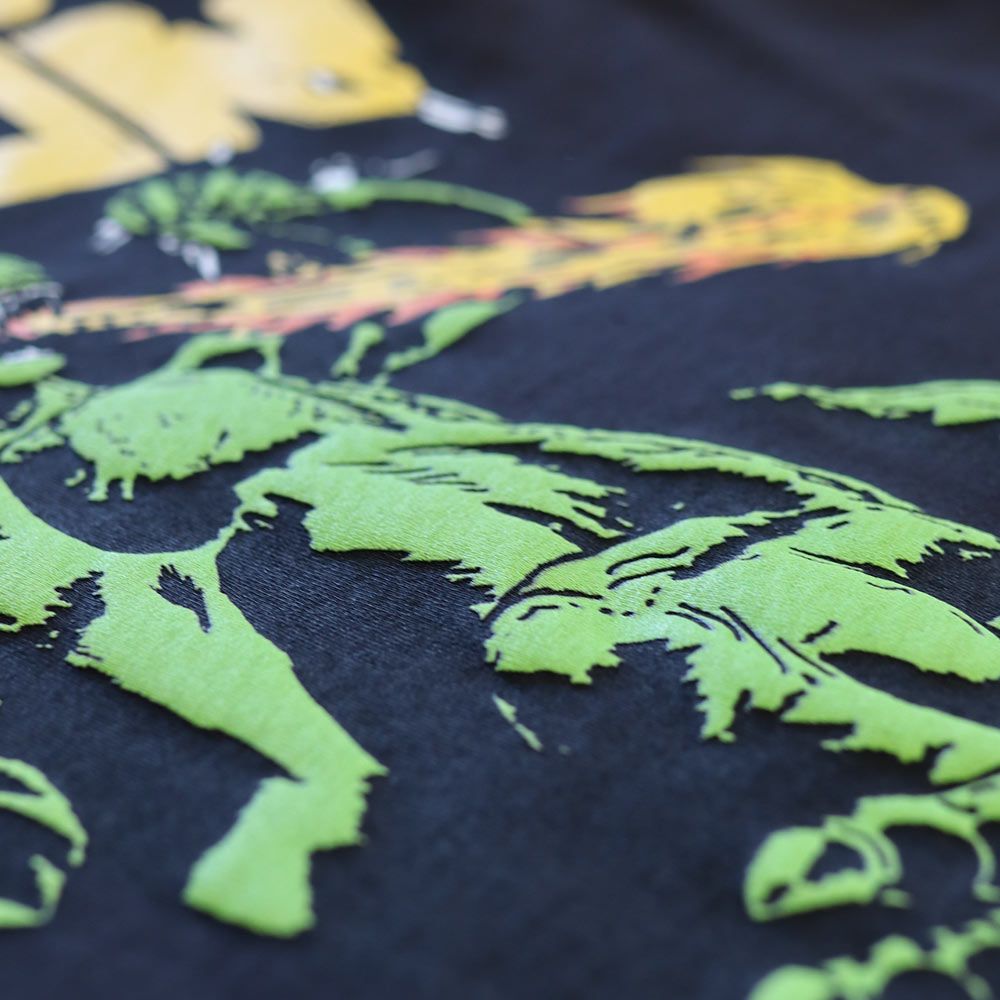
Puff print and flat screen print are both plastisol-based decoration methods, but puff print uses a foaming additive that raises the ink into a 3D texture, while flat screen print lays ink smoothly onto the fabric surface. Both start from the same process — a mesh screen, a squeegee, and heat curing — but the ink behaves differently once it hits the dryer. Choosing between them comes down to your design, your fabric, and how much visual weight you want your logo to carry.
What Is Flat Screen Printing?
Flat screen printing is the standard method most people picture when they think of custom apparel: plastisol ink pushed through a mesh screen and cured flat against the fabric. It's the most cost-effective option for bulk orders, supports Pantone color matching, and works on prints up to 17" x 23". It's the right call for most logos, text-based designs, and multi-color artwork where the ink just needs to be crisp, accurate, and durable.
What Is Puff Screen Printing?
Puff screen printing uses the same plastisol base but mixes in a foaming additive. When the printed garment passes through the conveyor dryer, heat activates that additive and the ink physically rises off the fabric, settling at roughly 0.4–0.5mm of raised height. The result is a soft, tactile, three-dimensional print that reads as more premium — common on streetwear drops, fashion labels, and merch meant to stand out on a shelf. Puff prints top out at a slightly smaller max size (14" x 16") and work best with bold, simple shapes rather than fine detail.
Puff Print vs. Flat Screen Print: Side-by-Side Comparison
When Is Puff Print Worth the Extra Cost?
Puff print is worth it when the goal is shelf presence — merch that needs to feel more premium than a standard tee, or a logo that needs to physically stand out rather than just be readable. It performs best with bold typography, simple logos with clean lines, and solid filled shapes on cotton or cotton-blend garments. It's not the right choice for gradients, halftones, photorealistic images, or small text under about a quarter-inch tall — the raised texture can't hold that level of detail, and the print will look muddy instead of sharp.
When Should You Stick with Flat Screen Print?
Flat screen printing is the better choice when your design has multiple colors, fine detail, or needs exact Pantone matching across a large run. It's also more budget-friendly at scale, since it skips the extra ink additive and the more delicate curing puff printing needs. If your logo relies on precision — thin lines, small wordmarks, layered artwork — flat screen print will reproduce it more faithfully than puff ever could.
Can You Combine Puff and Flat Printing in One Design?
Yes. A common approach is printing the main logo or wordmark in puff for texture and impact, while supporting elements — a tagline, sleeve print, or secondary graphic — are printed flat. This adds visual contrast without pushing the entire design into puff's size and detail limitations.
Does Puff Printing Cost More Than Flat Screen Printing?
Generally, yes. Puff printing requires a specialized ink mix and a more controlled curing process, which typically puts it a tier above flat screen printing in cost. Both share the same 50-piece minimum and volume-based pricing, with breaks at 75, 100, 150, 250, 500, and 1,000 pieces — so the price gap is more about the ink and setup than the order size itself.
The Bottom Line
Flat screen print is the reliable, cost-effective default for most apparel. Puff print is the upgrade to reach for when a bold, simple logo needs to feel premium and tactile rather than just look good. Many brands use both: flat for the bulk of a run, puff for a hero logo that needs to pop.
Not sure which fits your design? Our screen printing team can help you compare both methods against your actual artwork, or check out our puff screen printing service page for more on the process, pricing, and what makes a design puff-ready.
Request a quote and hear back within two hours.